Hedging Your Bets Strategy
Learn how hedging bets works in sports betting. Discover risk control strategies, bankroll protection, cash-out alternatives, and smarter hedge sizing with Batery Bet.
Hedging your bets is a risk control technique. You place an additional wager that offsets part of your original position so that bad outcomes hurt less and good outcomes are banked earlier. Hedging normally reduces maximum upside in exchange for smoother results and better bankroll survival. It is risk management, not a magic way to mint profit.

What bet hedging is and is not
What bet hedging is and is not
A hedge is an intentional second position that reshapes the payoff curve of your first bet. The goal is to change the shape, not to guess again at random. Arbitrage is different. Arbitrage tries to lock in a guaranteed profit across prices, while hedging trades some expected value for lower volatility. If you are paying extra margin to make your slip feel safer, you are hedging. If the profit is baked in regardless of who wins, that is arbitrage.
When hedging genuinely helps
When hedging genuinely helps
Think in scenarios. Pre-match, early prices sometimes move in your favor after team news or market sentiment shifts. If you captured a long number on a team and the market shortens sharply, you can add a small position on the other side to crystallize part of the edge. In live betting, new information lands constantly: injuries, red cards, weather changes, tactical switches. When the probability picture has clearly changed, a partial hedge can bank gains or cap losses.
Futures benefit even more. A pre-season long shot that reaches a semifinal can be protected by backing the opponent in each remaining round. Parlays magnify both upside and variance, so if several legs have already landed, hedging the final leg is a rational way to protect capital while keeping some exposure to your original read.

Prices first, emotions second
Prices first, emotions second
Hedging should follow a price. If your fair estimate for the underdog has fallen from twenty percent to ten, your original value thesis is gone. A hedge is then a price-based correction, not a panic button. The clean way is to compute a flat-profit or flat-loss profile before you act. Decide what you want the new payoff to look like and then size the hedge to fit that picture rather than chasing a feeling in the last minute of the game.
Two clear examples you can copy
Two clear examples you can copy
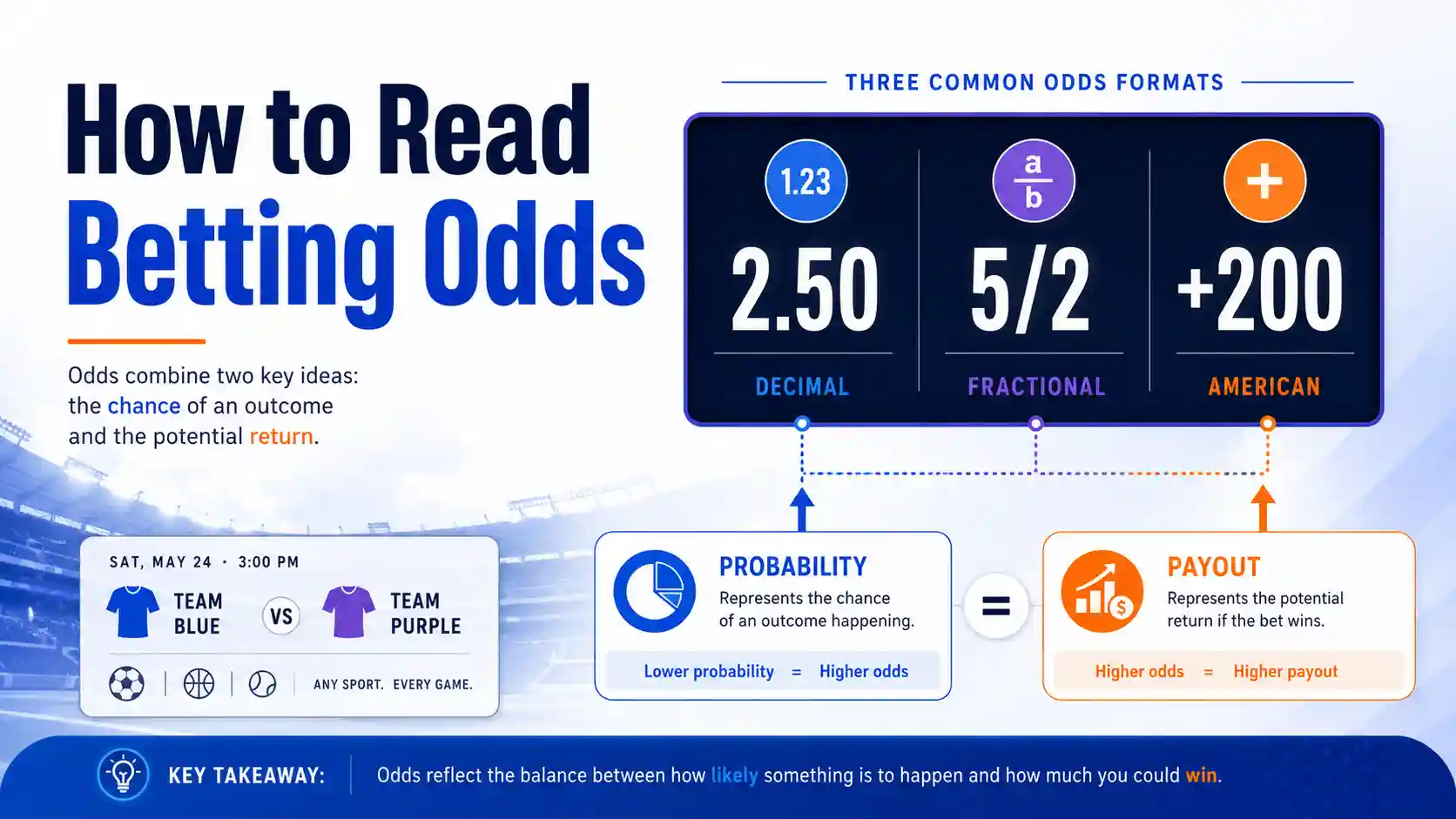
Example one: you bet 100 at 3.00 on Team A pre-match. Live odds on Team B are now 2.50. If you stake 120 on Team B, your outcomes flatten. Team A wins and you earn 200 from the first ticket minus 120 from the hedge for a net of 80. Team B wins and you earn 180 from the hedge minus 100 from the first ticket for the same net of 80. You have traded the possible 200 gain for a consistent 80 across results.
Example two: you hold a futures ticket on a tournament outsider at 15.00. They reach the final as a small underdog at 2.60. If your goal is partial insurance, you can back the favorite for an amount that covers the original stake plus a portion of expected profit. If your goal is a flat win, you can solve for a stake that equalizes returns for either team. You can also split the difference and secure a base profit while leaving some upside live if your original read was strong.

Cash-out buttons versus manual hedges
Cash-out buttons versus manual hedges
A bookmaker cash-out is a pre-packaged hedge. It is fast and simple, but the price usually contains an extra layer of house margin. If you have access to the market, placing the opposite side yourself typically gives a sharper result. That is doubly true on an exchange, where you can lay your original selection and control liability without donating extra spread. Cash-out still has a place when time is tight or limits are changing, yet it should be your last resort rather than your default.
Exchanges, lay betting and dutching
Exchanges, lay betting and dutching
An exchange lets you lay an outcome, which is functionally betting on it not to happen. That creates a tidy, controllable hedge because you can match price and size precisely. For multi-runner markets, dutching is a proactive alternative. You split stakes across several likely winners so that the cash return is the same no matter which of your covered selections lands. Dutching is a hedge built before kickoff rather than a reactive trade during the event, and it works best when several contenders are live at fair prices.
Bankroll impact and sizing discipline
Bankroll impact and sizing discipline
Hedging reshapes variance. If you hedge often, your graph of results gets smoother and the tails shrink, but the average expectation usually drops a little because each hedge pays another spread. To manage that trade-off, start with a fixed session fraction for total exposure and then decide what share of that fraction you are willing to devote to protection. Flat stakes keep the record clean. If you use a Kelly style, apply a small fraction only, because model error plus multiple lines compounds very quickly. Never chase with larger systems or bigger hedge sizes after a loss.
Betting psychology - regret versus process
Betting psychology - regret versus process
Hedges fail when they are driven by fear rather than numbers. Write one sentence that states why you are hedging: new information, price drift, or a bankroll target. If the sentence says “I am nervous,” pause and recalc. The most expensive hedges are the ones placed to soothe nerves with no price edge. Good record-keeping helps. Note the event, prices, stake sizes, and goal of each hedge. Review weekly to see whether hedging is strengthening or weakening your season results.

Common mistakes to avoid
Common mistakes to avoid
Do not confuse felt safety with real value. If your hedge tears away most of the expected profit from a strong original price, skip it. Do not hedge short-priced selections just to feel active, multiple small spreads can bleed a bankroll quietly. Do not ignore settlement rules for pushes, dead heats, or void legs if you are hedging parlays. Do not scale stakes wildly after a bad beat. Build your rules in calm moments and follow them under pressure.
A simple workflow you can reuse
A simple workflow you can reuse
Before the event, outline your plan in two lines: where you expect to hedge and what your target payoff profile looks like. While the event is live, re-price only when new information is genuine, not when the crowd reacts to noise. When a hedge triggers, compute the exact hedge size to match your plan, place it with the cheapest method available, and record it. After the event, evaluate whether the hedge improved your distribution of outcomes without consuming too much expectation. Iterate with small tweaks, not wholesale changes each weekend.
Pre-hedge checklist you can actually use
Pre-hedge checklist you can actually use
Before the checklist, one reminder: the goal is to trade a little upside for a lot of control only when the price makes sense.
- Confirm the reason - new information or variance control, not regret.
- Re-price the event and decide whether you want flat profit, a protected floor, or partial cover.
- Compare methods - opposite bet at market price, exchange lay, or packaged cash-out.
- For parlays and futures, model a few partial hedges rather than all-or-nothing exits.
- Important! Fix stake discipline - total exposure for the day, unit size, and a hard stop after the plan is complete.
- Log every hedge so you can see patterns and cut the ones that do not help your results.